_edited_edited.png)
Liquid Vapor Barrier for Durable Concrete Coatings
- Jan 19
- 6 min read
Have you ever spent a weekend painting your garage floor, only to watch it bubble and peel a few months later? You’re not alone, and it’s likely not your fault or the paint you used. The real culprit behind most garage floor paint problems is an invisible force at work inside the concrete itself, a problem that frustrates countless homeowners.
This hidden issue stems from a simple, surprising fact: concrete isn’t a solid barrier like glass, but more like a very dense sponge. It constantly pulls invisible moisture up from the ground, which then gets trapped under any paint or coating. This trapped vapor builds pressure and eventually causes issues like peeling epoxy flooring.
This guide will walk you through why concrete behaves this way and how a special liquid-applied barrier creates a waterproof shield. With this knowledge, you can ensure your concrete floor coatings are installed correctly and look great for years to come.
Think of Your Concrete Floor as a Giant, Hard Sponge
You’ve probably noticed how a concrete sidewalk darkens after it rains, soaking up water before it dries. Even though concrete feels rock-solid, it’s not completely solid like a sheet of glass. It’s actually full of microscopic pores and tiny tunnels, making it behave more like a very dense, hard sponge. This is why a simple spill can leave a temporary stain—the liquid is literally sinking into the surface of your porous concrete.

This sponge-like quality doesn't just absorb spills from above. The ground underneath your home’s foundation is a constant source of moisture. Your concrete slab rests directly on this soil and acts like a wick, slowly but surely pulling that invisible water vapor upward. This process explains why you might notice concrete floor moisture in a basement or garage that feels damp, even when there have been no leaks or floods.
That persistent dampness is a sign that your concrete is "breathing" moisture. While this is a natural process, it becomes a huge problem when you try to seal the surface. This is the first step in learning how to stop moisture through concrete floor from ruining your project. But what happens when you put a coating over this damp, breathing surface?
How Invisible Moisture Pushes Your Coating Right Off the Floor
Putting a standard coating or paint on top of that "breathing" concrete is like clamping a lid on a simmering pot of water. Even though you can't see it, water vapor is constantly rising from the ground, through the concrete, and looking for a way to escape. When it hits the underside of a sealed coating, it gets trapped. That invisible vapor builds pressure, creating a powerful force that pushes upward against your new floor finish.
This relentless upward push is the direct answer to what causes epoxy to bubble. The trapped moisture eventually gathers enough force to separate the coating from the concrete surface, creating blisters, bubbles, and peeling. Sometimes these bubbles are filled with a salty, watery liquid—a sure sign of moisture failure. The issue of preventing osmotic blistering in epoxy coatings isn't about better application technique; it’s about stopping the moisture before it can get trapped.
A simple bucket of floor paint from the hardware store often fails because these products aren't designed to hold back the constant hydrostatic pressure in concrete floors pushing up from below. They might stick for a while, but the moisture will always win the battle, eventually leading to a peeling, bubbling mess. So, if a regular coating can’t survive, how do you create a beautiful, durable floor that actually lasts?
The Solution: A "High-Tech Rain Jacket" That Becomes Part of Your Concrete
The answer to stopping this destructive moisture lies in a special product category known as a liquid-applied vapor barrier. Think of it as a high-tech rain jacket for your concrete. Unlike regular primers or paints, the only job of this essential first layer is to create an impenetrable shield that stops water vapor from rising through the floor.
When you use a roll-on concrete vapor barrier, it doesn’t just dry on top of the surface. Instead, the thin liquid penetrates deep into the concrete's network of microscopic pores—the very same channels that water vapor uses to travel upwards. As it cures, it hardens and cross-links within the concrete itself, effectively plugging those pathways and forming a solid, waterproof shield from the inside out.
By transforming the top layer of your porous concrete into a non-porous, monolithic slab, the barrier creates a permanently dry and stable foundation. Your final floor coating can now bond directly to this new surface without any threat of moisture pressure pushing it off from below. The result is a finish that won't bubble, peel, or fail.
Liquid Barrier vs. a Plastic Sheet: Why Bonding Is Better for Coatings
You might be wondering, "If I just need to block moisture, why not lay down a simple sheet of plastic?" It’s a great question that gets to the heart of why liquid-applied barriers are so effective for coatings. While a plastic sheet (often called a sheet membrane) does block moisture, it just sits on top of the concrete. Trying to paint over it would be like painting on a loose tarp—the paint has nothing to permanently grab onto and would easily flake off.
In contrast, a two-part epoxy moisture barrier doesn’t just cover the concrete; it becomes one with it. By soaking into the pores and hardening, it creates a single, solid surface that is chemically bonded to the floor. This process gives your final paint or epoxy coating a stable, unified foundation to grip. The coating bonds to the barrier, and the barrier is bonded to the concrete, creating a strong, continuous system that resists peeling.
This is the fundamental difference in the liquid vapor barrier vs. sheet membrane debate. Sheet membranes are excellent for flooring that “floats” on top, like laminate planks or carpet underlayment. But for any coating that needs to adhere directly, a bonded liquid product is the best moisture mitigation system for concrete because it ensures your beautiful finish becomes a permanent part of the floor.
Do I Really Need a Moisture Barrier for My Floor?
While a professional concrete floor moisture testing guide involves special equipment, you can often spot the key signs of moisture in concrete just by looking. Your floor may be silently telling you it has a problem that could ruin a new coating. The trick is knowing what to look for before you invest your time and money into a beautiful new finish.
You almost certainly need a moisture barrier if:
You see dark, damp spots on the concrete that seem to come and go.
You find a white, chalky powder on the floor or walls (this is a salt deposit left behind as water evaporates).
You are finishing a basement or asking, "do I need a moisture barrier under epoxy flooring" for a garage. Floors that are below-ground or on a slab are prime candidates for moisture issues.
Skipping this step is a gamble you’re likely to lose. Without a barrier, moisture vapor will eventually push its way up, causing your expensive new coating to bubble, blister, and peel. All the effort and money you spent will be wasted, forcing you to strip the failed coating and start over. Think of a moisture barrier not as an optional add-on, but as a critical insurance policy for your investment.
More Than Just a Floor: Protecting Your Home and Your Investment
That persistent, damp smell in a basement often comes directly from the concrete itself. Because concrete is porous, it can hold moisture that leads to that classic musty odor. Learning how to stop a musty basement smell often starts with controlling moisture at its source: the floor. A liquid moisture barrier soaks in and seals the surface, effectively trapping the source of the smell.
Beyond just eliminating odors, creating a dry foundation contributes to a healthier home. Constant dampness can encourage the growth of mold and mildew, which can affect indoor air quality. By locking out moisture from the ground, a barrier helps make your basement or garage a drier, cleaner, and more comfortable space for your family.
Ultimately, the benefits of a two-part epoxy moisture barrier are about protecting your entire project. It's a small step that safeguards your much larger investment in a finished floor. This proactive approach ensures your beautiful new coating lasts for years and that your space remains healthy and enjoyable.
Your Simple Plan for a Perfect, Long-Lasting Concrete Floor
That peeling paint or damp basement floor is no longer a mystery. You now understand that concrete acts like a hard sponge and invisible moisture is the real culprit. A liquid-applied moisture barrier isn't just another layer of paint—it’s the essential shield that stops that moisture and protects your final coating.
Before starting your next project, follow this simple plan for success:
Check for Signs of Moisture: Look for damp spots, musty smells, or a white, chalky powder on the concrete surface.
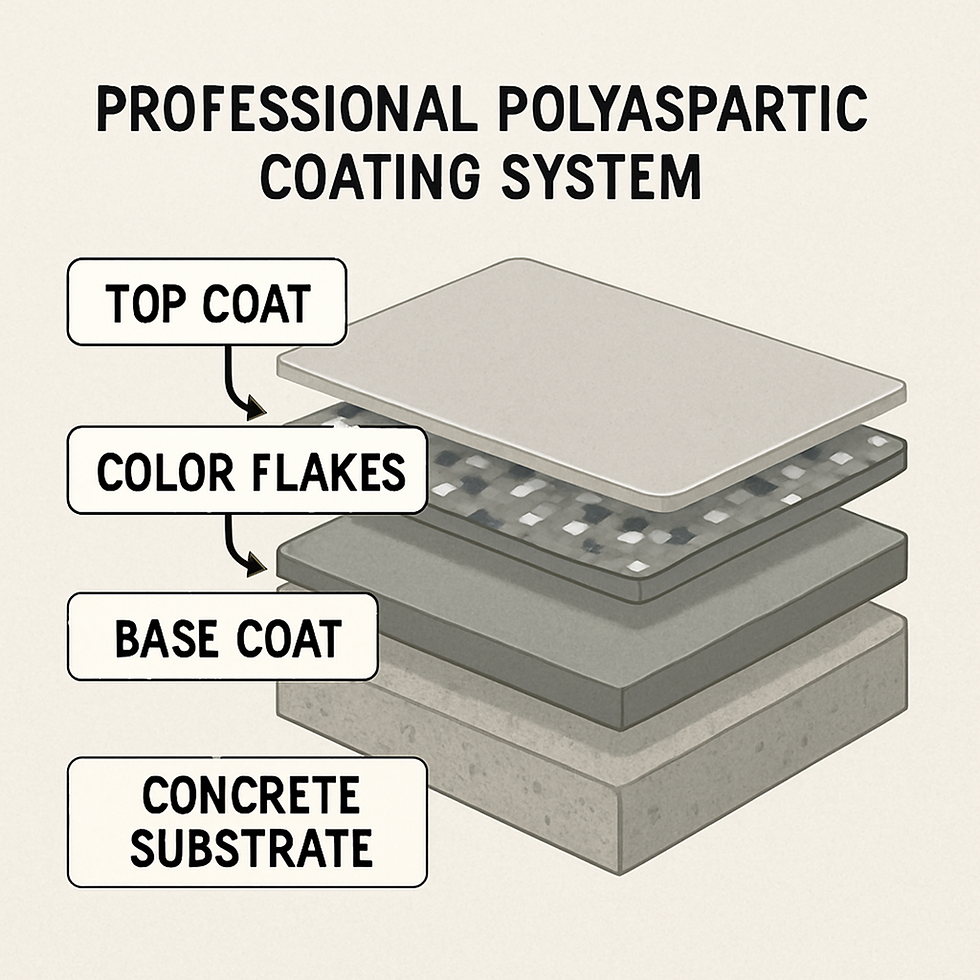
Choose a Coating "System": Whether you are following a DIY epoxy flooring guide or hiring a pro, insist on a system that includes a dedicated liquid moisture barrier.
You no longer see just a slab of concrete; you see a dynamic surface. This knowledge empowers you to ask the right questions and make confident choices, ensuring your beautiful new floor is built on a foundation of success. For professional installation contact Raz-Barry Construction for a free estimate!


Comments