_edited_edited.png)
Concrete Coating Cost per Square Foot (2026 Guide)
- May 4
- 10 min read
If you’ve looked at your stained, cracking garage floor recently, you’ve likely asked the thousand-dollar question: what will it actually take to fix this? When estimating a concrete coating cost per square foot, industry averages generally land anywhere between $3 and $15. Think of this measurement simply as pricing out your floor's real estate, where a standard 400-square-foot, two-car garage requires a completely different financial approach than a small back patio.
Seeing that wide price range often leads homeowners straight to the hardware store, wondering how much does concrete coating cost when done over a quick weekend. According to professional contractors, the massive price discrepancy between a $150 DIY kit and a $2,500 professional installation rarely comes down to the liquid in the bucket. Just like applying high-end makeup over an unwashed face, pouring premium chemicals over a quick-swept slab guarantees a messy, peeling failure.
The secret to a floor that lasts two decades rather than two months is best explained by the "Iceberg Metaphor," where the shiny topcoat is just the 10% you actually see. Industrial prep accounts for the 90% of the work you are truly paying for, utilizing heavy-duty diamond grinders to shave off the top layer of concrete so the new liquid can physically sink in and grip the surface. Low-cost kits routinely fail under the heat of car tires because simple household cleaning cannot create this necessary bond, a step requiring specialized tools most homeowners simply do not own.
Navigating these hidden realities is exactly why this 2026 guide focuses strictly on total pricing transparency. Determining exactly how much is concrete coating requires acknowledging that reliable professional quotes vary based entirely on the intensive preparation needed to protect your investment, rather than just the paint applied at the very end.
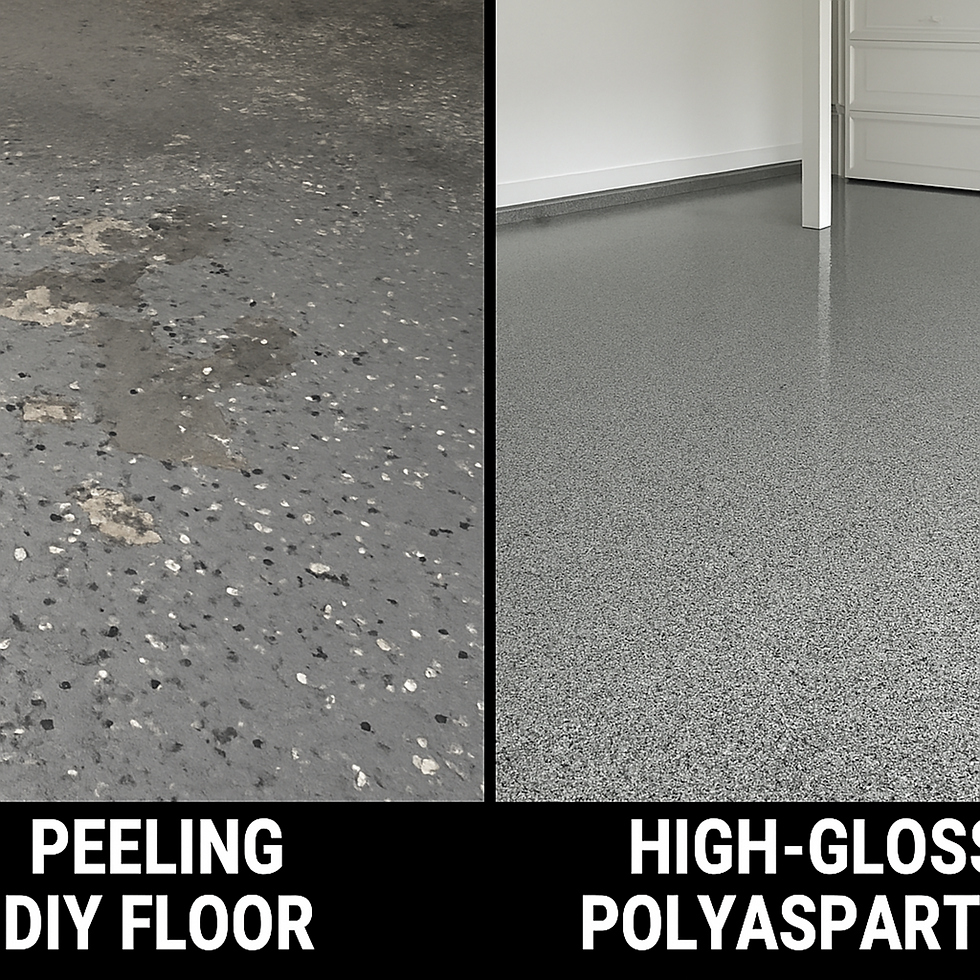
Breaking Down the $3 to $15 Per Square Foot Reality
Looking at 2026 national averages, the average cost of concrete coating ranges wildly depending on the protective shield you choose for your floor. Before factoring in your slab's existing condition, here is what to expect per square foot for materials and standard application:
● DIY Epoxy Kits: $2–$3
● Professional Epoxy: $5–$8
● Polyaspartic Systems: $9–$12
● Decorative Overlays: $12+
Total footprint directly influences these concrete coating prices through a contracting rule called "economies of scale." Essentially, it takes a professional crew the exact same amount of time to load their trucks, set up heavy grinding equipment, and mix chemicals for a 400-square-foot two-car garage as it does for a 2,000-square-foot workshop. Because those fixed setup costs spread out over much more floor space in larger projects, the price per unit drops, making massive basements significantly cheaper per square foot than tiny porches.
Deciding between a cheap weekend fix and a premium installation requires looking at your true concrete floor coating cost over time. If you want a surface that survives hot car tires without peeling, you must look beyond the initial invoice to find real value. A rigorous durability comparison between polyaspartic and epoxy systems is crucial for identifying which material genuinely lasts 20 years.
Why Florida Residents Pay More for Humidity-Proof Coatings
Living in a tropical climate brings unique challenges to home improvement. When researching how much do concrete coatings cost in florida, you will notice quotes are generally higher than in dry, inland states. This price bump isn't a tourist tax; it stems from the state's high water table and porous limestone foundation, which acts like a giant, water-soaked sponge resting underneath your garage floor.
That trapped underground water constantly tries to evaporate upward through your concrete, a silent threat known as Moisture Vapor Transmission (MVT). Think of MVT like steam escaping a boiling pot with a tight lid; if a contractor seals the floor without addressing it, that upward pressure will eventually "pop" your beautiful new coating right off the concrete. Combating this requires specialized vapor barriers, naturally increasing material costs and impacting regional labor rates due to the extra application time.
Smart homeowners protect their investment by knowing exactly what to ask before signing a contract. Always verify your professional performs a calcium chloride test—a simple moisture reading—before pouring any product. Paying for this extra moisture mitigation might feel frustrating, but it is just one hidden step in a much larger, invisible process that dictates whether your floor survives.
The Iceberg Metaphor: Why Surface Prep is 90% of Your Bill
A flawless garage floor acts exactly like an iceberg. The glossy finish is merely the visible ten percent; the true foundation hides underneath. When calculating how much does concrete surface preparation cost, homeowners are often surprised it dominates the quote. This vital phase creates a Concrete Surface Profile (CSP), which simply means roughening the smooth slab so the new liquid coating has microscopic grooves to grip tightly.
Comparing acid washing vs grinding reveals why budget kits frequently fail. Acid washing merely cleans the surface without carving deep enough grooves, causing the dreaded "peeling floor" syndrome months later. True professionals instead rely on diamond grinding—heavy machinery equipped with industrial diamonds to physically shave the top layer of concrete. Quality installation always follows four standard prep steps:
1. Moisture test
2. Diamond grinding
3. Crack filling
4. Vacuuming/HEPA cleaning
Attempting this preparation yourself isn't cheap. Renting a walk-behind grinder and industrial vacuum costs roughly $200 per day, plus the extreme physical toll of maneuvering a 150-pound machine. Paying for this grueling professional labor guarantees lasting adhesion, turning a fragile two-year fix into a durable twenty-year floor. This critical groundwork also serves as the ultimate litmus test for contractors, helping homeowners save thousands by spotting professional labor red flags.
How to Save $1,000 by Spotting Professional Labor Red Flags
Protecting your investment means spotting a genuine coating quote versus a glorified painting quote. When asking is professional concrete finishing worth the money, the answer depends on who arrives at your house. The industry harbors "trunk-slammers"—unlicensed handymen working out of their vehicles who completely skip the crucial grinding prep. They lure you with a rock-bottom price, applying thin, hardware-store paint that peels the moment hot tires touch it.
You can catch these tricks by comparing standard labor rates for professional concrete staining or coating against the local average. Legitimate bids always reflect premium materials like 100% solids resin, which means the product contains no evaporating liquids and cures into a rock-hard, durable shell rather than shrinking. If a quote seems suspiciously cheap, negotiate based on the exact project scope and materials used instead of just haggling the bottom line.
Always verify a contractor’s insurance and ask about their grinding equipment to guarantee you are hiring real experts. This basic background check stops you from paying twice for a failed floor. Vetting a quality installer simplifies the budgeting math, establishing a clear 400-square-foot standard for estimating a typical two-car garage.
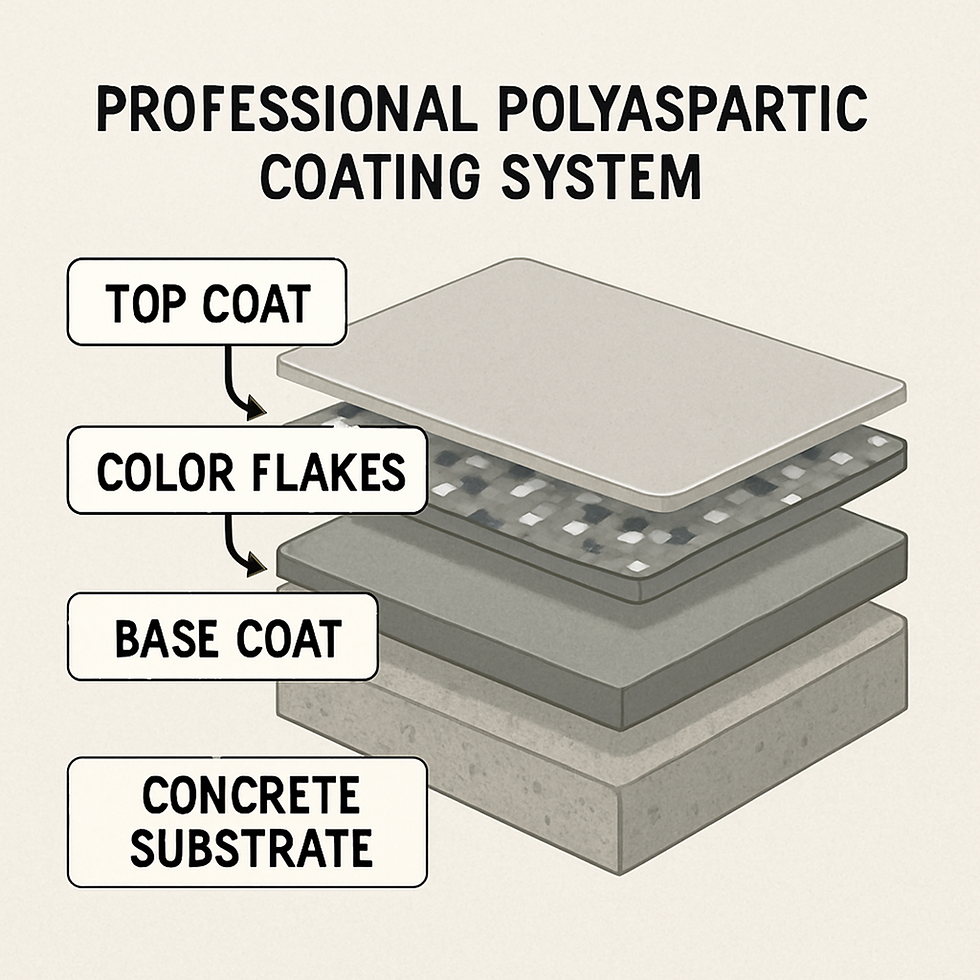
The 400-Square-Foot Standard: Estimating Your 2-Car Garage
Grabbing a tape measure to calculate your garage concrete coating cost usually starts with simple math. A standard two-car garage measures roughly twenty by twenty feet, establishing a 400-square-foot budget baseline. Multiplying this floor real estate by the average concrete coating cost per square foot—typically $5 to $9 for professional work—creates a base estimate of $2,000 to $3,600. However, the flat floor only tells part of the story.
Look at your garage perimeter and you will likely notice a short concrete ledge acting as a baseboard. These "stem walls" must be coated for a seamless look that protects your drywall from water damage. Installers measure these vertical surfaces using linear footage—the straight distance around the room—rather than flat square footage. Because vertical application requires
specialized thickeners to prevent sagging, adding stem walls will slightly bump up your final price.
Comprehensive garage floor epoxy installation estimates must also account for the apron, which is the small slab extending just outside your garage door. Coating this exposed section creates a clean transition to your driveway and seals vulnerable edges from weather. Upgrading indoor concrete spaces next requires entirely different moisture management strategies, particularly when mitigating basement floor peeling with vapor barrier installations.
UV-Resistant Patio Sealers: Keeping Your Pool Deck Cool and Intact
Stepping onto a backyard patio introduces another budget factor: the sun. While you know UV rays cause damage, standard epoxies in direct sunlight also suffer from "chalking"—a powdery breakdown of the surface—or severe yellowing. Securing the benefits of UV resistant patio sealers is essential to avoid replacing your floor prematurely. Polyaspartic or acrylic formulas cost more upfront but act as a permanent sunscreen for your slab.
Wet spaces also demand serious traction. A glossy finish looks beautiful, but easily turns into a dangerous ice rink near pools or sprinklers. Factoring "shark grip"—a specialized anti-slip additive—into your estimate provides critical slip resistant pool deck coating benefits. This invisible, sand-like grit mixes directly into the final topcoat to safely grip bare feet without feeling uncomfortably sharp.
Aesthetic choices ultimately dictate your final outdoor bill. Reviewing any decorative acrylic overlay pricing guide reveals that basic, clear sealers remain highly affordable, while stamped finishes mimicking natural stone require expensive, specialized labor. Debating these premium backyard upgrades naturally raises questions about the true value of commercial-grade pricing for residential projects.
Commercial Grade Pricing for Residential Projects: Is It Worth It?
Looking at a quote for a heavy-duty shop floor might make you wonder if your two-car garage really needs a bunker-level defense system. Evaluating commercial grade floor coating price factors requires analyzing how you actually use your space. If your garage acts as an active workshop with dropped tools, heavy jacks, and constant traffic, paying a premium for professional-grade materials stops being overkill and starts becoming smart, long-term protection.
Time is another hidden currency in these higher-end estimates. Professional systems drastically reduce your "return-to-service time," which is industry speak for how quickly you can park your car or walk on the floor again safely. While standard residential paint requires days of careful waiting and curing, commercial products harden rapidly. This fast-cure technology often cuts your household downtime from a chaotic week of displaced belongings down to just 24 hours.
The secret behind this rapid, rock-hard finish lies in a metric called "solids content"—meaning the applied liquid doesn't evaporate away as it dries, leaving a much thicker shield. Gaining these industrial strength polyurea coating advantages means investing in a 100% solids formula that won't shrink. This upfront investment drastically alters long-term expenses, shifting the financial focus to the critical 2-year versus 20-year math.
The 2-Year vs 20-Year Math: Why DIY Kits Often Fail Early
It is incredibly tempting to grab a bucket from the hardware store when initially asking how much do concrete coatings cost. However, DIY kits are typically water-based, meaning they dry into a paper-thin film that peels easily under hot tires. By contrast, professional resin systems provide a thick, permanent shield. This completely changes the average cost of concrete coating when you run the real-world numbers:
● DIY Kit: $500 initial cost. Fails in 2 years, requiring total removal and recoating.
● Professional Setup: $2,500 initial cost. Lasts 20 years with zero replacement fees.
The real financial trap lies in the failure cost. When that cheap layer inevitably bubbles, calculating your Total Cost of Ownership (TCO)—which means looking at the lifetime price tag rather than just the initial receipt—reveals an expensive reality. You must now pay for professional hydro-blasting or heavy diamond grinding just to scrape away the old mistake, drastically skyrocketing the long term maintenance costs for sealed floors.
Choosing between these options ultimately depends on your timeline; a quick house flip might survive a basic kit, but a long-term residence needs a permanent solution. Regardless of the chosen route, even premium armor shatters if the surface beneath is crumbling, making foundational crack repair an unavoidable first step.
Fixing the Foundation: Costs for Repairing Cracks Before Coating
Pouring premium resin over a damaged floor is like painting over rotten wood. You cannot simply bridge gaps with liquid material, as doing so guarantees immediate failure. When researching repairing cracked driveways before resurfacing, the golden rule is straightforward: the foundation must be structurally flawless, otherwise your expensive new topcoat will snap the moment the concrete naturally shifts.
To permanently lock these fractures together, contractors use a technique called crack chasing, which means grinding the crack into a clean "V" shape so industrial polymer fillers can seep deep inside to bind the slab. When calculating how much does concrete surface preparation cost, you should budget $1 to $5 per linear foot specifically for this crucial repair work.
Severe damage demands extra attention, particularly with "heaving" slabs, which means one side of the crack sits pushed higher than the other. These uneven trip hazards must be mechanically leveled flat before any coating is applied. Once your repaired floor is perfectly smooth, calculating material coverage accurately is essential to avoid buying excess product.
Stop Buying Excess Material: Calculating Coverage Like a Pro
Multiplying length by width gives your basic square footage, but buying exactly that amount often leaves you stranded with a half-finished floor. When calculating material coverage for floor sealants, you must account for "porosity," which means how much your concrete acts like a rigid sponge. Older slabs have a much lower spread rate because they instantly drink up the first layer of liquid applied to them. To avoid the nightmare of running out of product mid-project, always add a 15% safety margin to your material budget to accommodate this thirsty foundation.
Surface craters present another hidden mathematical challenge. If your garage suffers from severe "pitting"—where winter salt or age leaves hundreds of small, rough divots—standard coatings won't fill the voids. You will need to budget for self-leveling underlayment material costs, typically adding $1.50 to $3.00 per square foot. This liquid compound creates a perfectly flat canvas for your final finish. While accurate calculations save money during installation, protecting that investment relies entirely on effective long-term maintenance strategies to prevent the cured surface from peeling.
Preventing the 'Pop': Long-Term Maintenance Costs for Sealed Floors
Keeping your floor flawless doesn't require a massive budget, but predicting the long term maintenance costs for sealed floors means understanding daily care. Harsh chemical cleaners will slowly eat away at the resin. Instead, you should always use a pH-neutral cleaner—which simply means a mild soap that won't dull the finish. You must also monitor the area for small chips from dropped tools. Patching these tiny breaks early prevents water from sneaking under the coating "shield" and popping the cured surface off your concrete foundation.
Future planning requires a sacrificial top-coat, acting like a replaceable screen protector for your garage. Every five to ten years, applying this new clear layer absorbs daily wear to extend your initial investment's life. While variables like the material and labor cost per square foot impact initial installation, this routine maintenance strategy saves thousands over a complete replacement. Mapping out these expenses provides a clear, actionable concrete coating roadmap from initial quotes to final curing.
Your 2026 Concrete Coating Roadmap: From Quotes to Curing
You began this journey wondering exactly how much do concrete coatings cost, likely viewing estimates simply as the price of heavy-duty paint. Now, you have the knowledge to accurately budget your floor real estate, recognizing that the true concrete coating cost per square foot reflects an investment in meticulous surface preparation and durable chemistry.
To translate this knowledge into a high-value investment rather than a low-quality expense, use this final action checklist to secure a 20-year floor life:
1. Measure and Moisture Test
2. Get 3 Diamond-Grinding Quotes
3. Verify '100% Solids' Materials
4. Confirm Warranty Terms
As you compare these estimates, revisit the pocketbook question: Are you looking for a two-year fix or a twenty-year floor? Synthesizing this pricing data reveals a hard truth in home improvement—the lowest quote is rarely the cheapest one in the long run. Skimping on preparation or relying on watered-down materials guarantees premature peeling and expensive redos.
Is professional concrete finishing worth the money? Absolutely, when executed to standard. View your bare concrete not as a finished surface, but as a vulnerable foundation requiring an expertly bonded shield. Move forward confidently, knowing exactly how to demand quality, vet contractors, and secure a floor built to withstand decades of heavy use.
Whether your in Volusia, Flagler, St. John's County, Raz-Barry Construction performs professional concrete coating installs. Contact Raz-Barry Construction today for your free professional estimate!


Comments