_edited_edited.png)
Garage Floor Coating Cost in Daytona Beach & Volusia County
- Mar 22
- 12 min read
If you live in Volusia County, you know the summer heat does more than just melt ice cream; it turns your car tires into heat magnets. When you pull into your garage after a drive down I-95, those scorching tires can bond with cheap paint, ripping it right off the concrete when you back out later. This frustrating mess, known locally as "hot tire pick-up," is exactly why standard floor paint rarely survives a single Daytona summer.
Are you considering a simple bucket of paint or a professional system? Real garage floor coating isn't just thicker paint; it is a chemical armor designed to fuse with your concrete. Think of the primer coat like the foundation of a house—if it’s weak or applied over dirt, the rest of the structure will eventually collapse. Professional high-solids garage epoxy floor systems penetrate the concrete pores rather than just sitting on top, creating a bond that resists both heat and heavy traffic. Beyond the heat, our local geography creates an invisible enemy under your feet. Because Volusia County sits so close to the water table, concrete slabs act like sponges that suck moisture up from the soil. In the flooring industry, we call this "moisture vapor." If you trap that vapor under a cheap coating that doesn't breathe or adhere correctly, the pressure builds up until it pops the floor loose, similar to how bubbles form under wallpaper in a steamy bathroom.
So, what is the bottom line for homeowners? When analyzing the Garage Floor Coating Cost in Daytona Beach & Volusia County, you can expect to pay between $5 and $9 per square foot for a professional installation. This means a standard two-car garage—usually around 400 square feet—typically lands between $2,000 and $3,600 depending on the condition of your concrete. While this is significantly more than a DIY kit, the price reflects the industrial materials and the labor required to ensure garage floors survive the climate.
That price tag covers much more than just the liquid poured on the floor. The majority of a professional’s time is actually spent on preparation, specifically grinding the concrete to open those pores for a secure bond. Knowing exactly where your money goes explains why a professionally coated floor adds permanent value to your home, while a weekend DIY project often becomes a yearly maintenance headache.

Decoding the $5 to $9 Price Range in Volusia County
Most Volusia County homeowners are surprised to learn that a professional installation isn't just about buying expensive paint. For a standard 400-square-foot two-car garage in Daytona Beach, quotes typically fall between $2,000 and $3,600. This pricing reflects the industry average of $5 to $9 per square foot for high-performance floor coatings. While the total square footage gives you a starting math equation, the final price tag is actually driven by a heavy investment in the installation process rather than just the liquid in the bucket.
Unlike a DIY kit where you pay 100% for the box and $0 for your own sweat, a professional invoice splits differently to ensure the floor survives our coastal humidity. You aren't just paying for the resin; you are paying for the industrial equipment required to make it stick. A typical project breakdown looks like this:
● Materials (~30%): Professional-grade polyurea or epoxy costs 3–4 times more than hardware store kits because they contain fewer solvents. Cheap kits are mostly water or solvents that evaporate, leaving a thin film, while professional resins leave a thick, durable armor.
● Labor & Preparation (~60%): This covers the skilled crew and heavy machinery needed to mechanically profile the concrete so the coating bonds permanently.
● Overhead & Consumables (~10%): This includes industrial diamonds for grinders, fuel, and insurance.
High-quality liquids are thick and durable, meaning you get what you pay for in actual thickness on the floor. However, even the most expensive material in the world will peel off if the concrete underneath isn't ready to receive it. That massive labor cost is primarily focused on the most critical step of the entire process: mechanical diamond grinding.
Why Diamond Grinding is the Secret to Longevity
Imagine trying to stick heavy-duty duct tape to a dusty, chalky wall; it might hold for a few minutes, but gravity will eventually pull it down. Concrete floors in Florida garages present a similar challenge because they are naturally smooth and often covered in invisible contaminants like old sealers or oil. Professional concrete diamond grinding prep solves this by physically removing the top layer of "dead" concrete to reveal fresh, porous rock underneath. Instead of relying on a weak surface stick, the grinder scratches the surface open, creating a rough texture that allows the base coat to soak into the pores and lock on physically, much like Velcro.
Big-box store DIY kits often suggest "acid etching"—washing the floor with a mild acid—to prepare the surface, but this method rarely creates enough texture for a permanent bond in our humid climate. Industry standards require a specific roughness known as a Concrete Surface Profile (CSP), which should feel exactly like 100-grit sandpaper to the touch. While acid might clean the floor, it usually leaves the surface too smooth, causing the new coating to simply float on top rather than grip the slab. If you skip this heavy-duty mechanical profiling, you are likely facing a costly garage repair down the road when hot tires peel that floating layer right off the floor.
Proper profiling does more than just create a rough surface; it fully opens the "capillaries" or pores of the concrete slab. In Volusia County, this open structure is essential so the primer coat can penetrate deep into the slab to find solid footing. However, opening these pores also exposes the coating to a unique local enemy: the invisible water vapor pushing up from the swampy Florida soil.
Fighting the 'Florida Sweat' with Moisture Vapor Barriers
Living in Volusia County means your home sits on top of a high water table, often just a few feet below the foundation. Because concrete acts like a dense, hard sponge, it naturally wicks this ground moisture upward through capillary action in a process called Moisture Vapor Transmission (MVT). While naked concrete lets this invisible vapor pass through harmlessly into the air, applying a dense coating creates a "cap" that traps the moisture underneath. When that pressure builds up—known as hydrostatic pressure—it becomes powerful enough to literally blow a coating off the surface, resulting in the bubbles or peeling sheets that drive homeowners to seek more durable garage solutions.

Stopping this "Florida sweat" requires more than standard paint; it demands a specialized Moisture Vapor Barrier (MVB). Think of an MVB as a waterproof dam installed directly into the concrete's pores before the decorative layers go down. Unlike standard primers that often fail under pressure, these industrial-grade resins dive deep into the open capillaries created during the grinding phase to block rising vapor. Implementing robust Florida garage floor moisture mitigation systems is the only way to ensure the chemical bond holds strong against the constant upward push of groundwater, protecting your investment from blistering.
Professional installers never guess about water content; they measure it using calcium chloride tests or moisture meters to determine if your slab needs this heavy-duty protection. Skipping this diagnostic step is the most common reason for coating failure in our region, regardless of how expensive the topcoat might be. Once the concrete is properly profiled and sealed against underground moisture, the next challenge is choosing a top layer that can handle the harsh UV rays beating down on your driveway. This leads us to the comparison between traditional epoxy and modern polyaspartics.
The Value of Full Broadcast Flake Systems
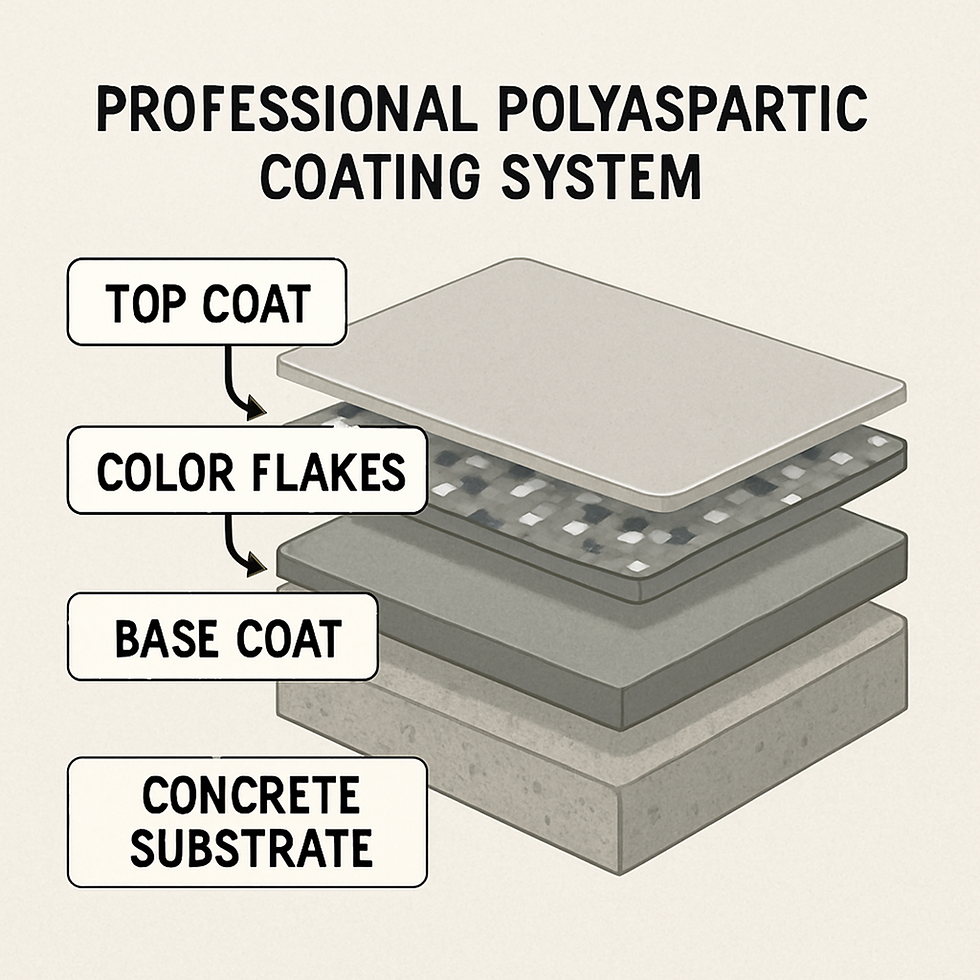
Most homeowners assume the colorful vinyl chips scattered across a garage floor are purely for aesthetics, but they actually serve as the muscle of the system. In a professional multi-layer decorative flake system installation, the term "full broadcast" means the installer throws vinyl flakes into the wet base coat until the floor refuses to hold any more. This technique builds the total thickness of the system up to 30 or 35 mils. To put that in perspective, a standard coat of DIY garage paint is only about 3 mils thick—like comparing the thickness of a credit card to a sheet of paper.
Beyond mere durability, saturating the floor with these vinyl flakes solves several practical issues common to Florida homes. Smooth concrete or simple paint can turn into a dangerous skating rink when wet from rain or humidity, but the texture created by the flakes provides essential grip. The benefits extend to daily maintenance as well:
● Slip Resistance: The texture breaks the surface tension of water, reducing slip hazards during summer storms.
● Impact Buffering: The dense layer of vinyl acts as a shock absorber if you drop a wrench or heavy tool.
● Visual Camouflage: The complex pattern hides dirt, sand tracked in from the beach, and minor concrete imperfections.
These full broadcast flake floor system advantages have made this method the default choice for garages in Ormond Beach and Port Orange. It offers the perfect balance of industrial strength and residential style, ensuring your investment looks clean even when it hasn't been swept perfectly. However, even the thickest coating cannot fix major structural issues underneath; specific repair factors can change your quote significantly.
Dealing with the 'Hidden' Costs: Crack Repair and Stem Walls
A standard quote usually assumes pristine concrete, but Volusia County soil settling often tells a different story. If your slab has shifted, repairing cracked garage floor concrete becomes a critical first step that changes the bottom line. Professional installers don't just paint over these imperfections; they must grind them open and fill them with a specialized mending material to prevent the new coating from splitting, usually adding a modest fee based on the severity of the damage.
Dealing with a previous homeowner’s failed DIY project presents another financial variable commonly referred to as the "removal factor." Grinding off an existing layer of peeling epoxy is labor-intensive and consumes expensive diamond tooling, typically adding between $1.50 and $2.50 per square foot to the project. This step is non-negotiable because the new system requires direct contact with raw concrete to bond correctly, meaning the hidden costs of garage floor refinishing often loom largest for those fixing a "cheap" job done years ago.
Vertical surfaces around the perimeter, known as stem walls, represent the final customization choice that impacts your budget. These concrete "baseboards" require hand-grinding and manual application since large floor machines cannot run vertically, often shifting pricing from square footage to linear footage for this specific detail. Choosing to coat these walls creates a seamless, bathtub-like seal that prevents water from seeping behind the floor, a level of protection and finish quality that distinguishes a custom install from the limitations of off-the-shelf products.
Professional Grade vs. Big-Box DIY Kits
The initial price tag on a home improvement store shelf can be incredibly persuasive, often promising a transformed garage for under $600. However, this apparent bargain often turns into a financial trap for Daytona Beach homeowners when the material succumbs to our intense local heat and humidity. DIY epoxy kits vs professional grade systems are separated not just by price, but by longevity; a box store kit typically fails within two years, leading to "hot tire pick-up" where your hot tires strip the paint right off the concrete. Because professionally grinding off that failed layer often costs three times more than the original kit, the "cheap" option eventually becomes the most expensive route to a durable floor.
Most consumer-grade products sold in retail stores are water-based epoxies, meaning a significant portion of the liquid in the can simply evaporates into the air as it dries. This results in a paper-thin layer that lacks the structural integrity to withstand heavy vehicles or dropped tools. In contrast, industrial grade garage floor polyurea and high-solids epoxies leave nearly 100% of the material on the floor after curing, creating a thick, armor-like shield. While water-based paint essentially dries onto the surface, professional resins react chemically with the concrete cap, forming a bond that moisture vapor from the Volusia soil cannot easily break.
Investing in a commercial-grade installation ensures that your garage floor remains a permanent asset rather than a recurring maintenance headache. The higher upfront investment covers specialized equipment and industrial chemicals that simply aren't available to the general public, ensuring resistance against UV fading and chemical spills. This distinct difference in material quality underscores the need to navigate the fine print of Navigating Warranties: What's Real and What's Marketing.

Navigating Warranties: What's Real and What's Marketing
A "Lifetime Warranty" stamped on a brochure is arguably the most confusing aspect of buying a floor system. In the Daytona Beach market, you must distinguish between a material warranty and an installation warranty. A material warranty simply claims the resin won't defectively harden in the bucket, whereas a true labor warranty protects you if the installer makes a mistake during the grinding or mixing process. Without the labor component, you could be left holding a free bucket of epoxy while staring at a peeling floor that costs thousands to fix.
To ensure your investment is actually protected against the Florida elements, look for specific coverage rather than vague promises. The fine print should explicitly state that the company will repair the floor at no cost if specific failures occur. A reputable residential garage floor coating warranty coverage plan generally includes protection against:
● Delamination (Adhesion Failure): The coating peeling away from the concrete.
● UV Damage: Yellowing or fading caused by intense sunlight exposure.
● Hot Tire Pickup: Rubber tires pulling the coating up after a drive.
Check if the protection stays with the house or leaves with you. The lifespan of high-quality resinous flooring extends for decades, so a transferable warranty becomes a tangible selling point if you decide to list your Volusia County home. Once you have secured a solid guarantee, keeping that coverage valid requires just a little effort, leading us to Maintenance Secrets for the Volusia Climate.
Maintenance Secrets for the Volusia Climate
Living near the coast means tracking in more than just groceries; the fine silica sand found from Ormond Beach to Ponce Inlet acts like sandpaper against your floor. Although modern systems are tough, leaving this grit underfoot wears down the protective gloss prematurely. Regular dust mopping prevents this mechanical wear, which is a critical step for effective concrete floor maintenance in humid climates where sticky salt air makes debris cling to surfaces.
When a dry mop isn't enough, you might be tempted to grab a soapy deck cleaner, but soap is actually the enemy of a streak-free finish. Detergents leave a film that builds up over time, creating a hazy look that eventually becomes slippery when wet, effectively negating the non-slip garage floor coating benefits you paid for. Instead, use five ounces of clear ammonia mixed per gallon of hot water to create a simple PH-neutral cleaner that lifts dirt without leaving a residue, getting you back to a pristine surface in under ten minutes.
Consistent care does more than just keep the garage looking nice; it preserves the structural integrity of the topcoat against UV rays and chemical spills. By avoiding harsh acids or aggressive scrubbing tools, you ensure the system lasts for decades rather than years. A well-maintained floor protects the underlying slab and maintains its aesthetic appeal long after the installation crew leaves. This longevity clarifies the financial return on your investment.
The ROI of a Pristine Garage in the Daytona Market
Local real estate agents often highlight the garage as a critical differentiator in our competitive market. While a cracked, stained slab signals deferred maintenance to potential buyers, a professional finish suggests the entire property has been meticulously cared for. This "marketability" factor helps homes stand out against new construction in Port Orange or DeLand, proving that high-quality garage solutions offer a competitive edge even if they don't appear on a standard appraisal line item.
Beyond resale potential, the immediate payoff is the elimination of concrete dusting. Unsealed floors constantly shed fine powder that settles on your car and tracks into your kitchen, adding to the sand already brought in from the coast. Sealing the surface permanently traps this particulate matter, keeping your vehicles cleaner and extending the life of your home’s air filters. This creates a sanitary buffer between the outdoors and your interior, significantly reducing daily cleaning efforts.
Many Volusia residents treat their garages as the "Florida basement," utilizing the area for home gyms or workshops. Professional floor coatings transform a dark, industrial slab into a bright environment that feels as finished as your living room. Instead of avoiding the space due to grime, you gain 400 square feet of usable footage that withstands humidity and spills. With the value clearly defined, the final step is mapping out exactly how to execute this project successfully.
Your Action Plan for a Better Garage Floor
You started this journey wondering why one quote was $800 and another was $3,000. Now, you can look past the bottom line and see the difference between a temporary paint job and a permanent industrial coating. Recognizing that a proper Garage Floor Coating Cost in Daytona Beach & Volusia County reflects a construction project—not just a painting task—protects you from the frustration of peeling floors next summer.
While the market average hovers between $5 and $9 per square foot, remember that the lowest bid often cuts costs on the most critical step: concrete preparation. In our humid coastal climate, paying for superior moisture mitigation and diamond grinding now is far cheaper than paying to remove a failed coating later. Avoid the local "trunk-slammers" by focusing on the process, not just the price tag.
Before signing a contract, vet your potential installers with this checklist to ensure you get a professional system:
● Do you use a planetary diamond grinder to mechanically prep the concrete surface?
● Is moisture vapor transmission testing included in your quote?
● Does your warranty specifically cover "hot tire pick-up" and delamination?
● Are your installers company employees or subcontracted labor?
● Can you provide references from local projects completed over three years ago?
Your garage is the portal to your Florida lifestyle, holding everything from hot car tires to sandy beach cruisers. By prioritizing professional preparation and high-quality materials over the lowest immediate price, you aren't just buying a shiny floor. You are investing in a maintenance-free entrance to your home that handles the Daytona heat as effortlessly as you do. For your free professional estimate, contact Raz-Barry Construction!


Comments